
Expressing the date and time in Polish can feel challenging at first. With the right steps and clear overviews, however, you can master this topic easily and confidently.
Here you will find a step-by-step guide together with the key tables that help you use cardinal and ordinal numbers correctly, name the months and master the most common constructions.
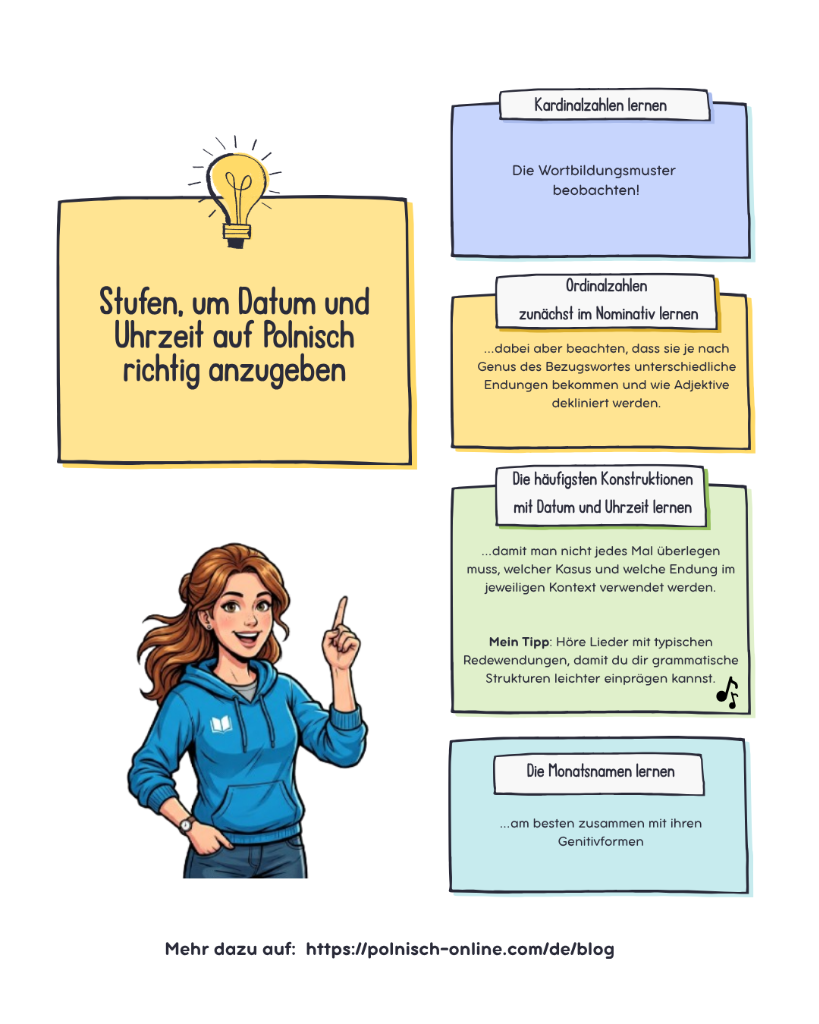
Steps to success
Begin with the basic cardinal numbers, then get familiar with the ordinal numbers in the nominative, and finally learn the typical constructions for dates and times, as well as the month names.
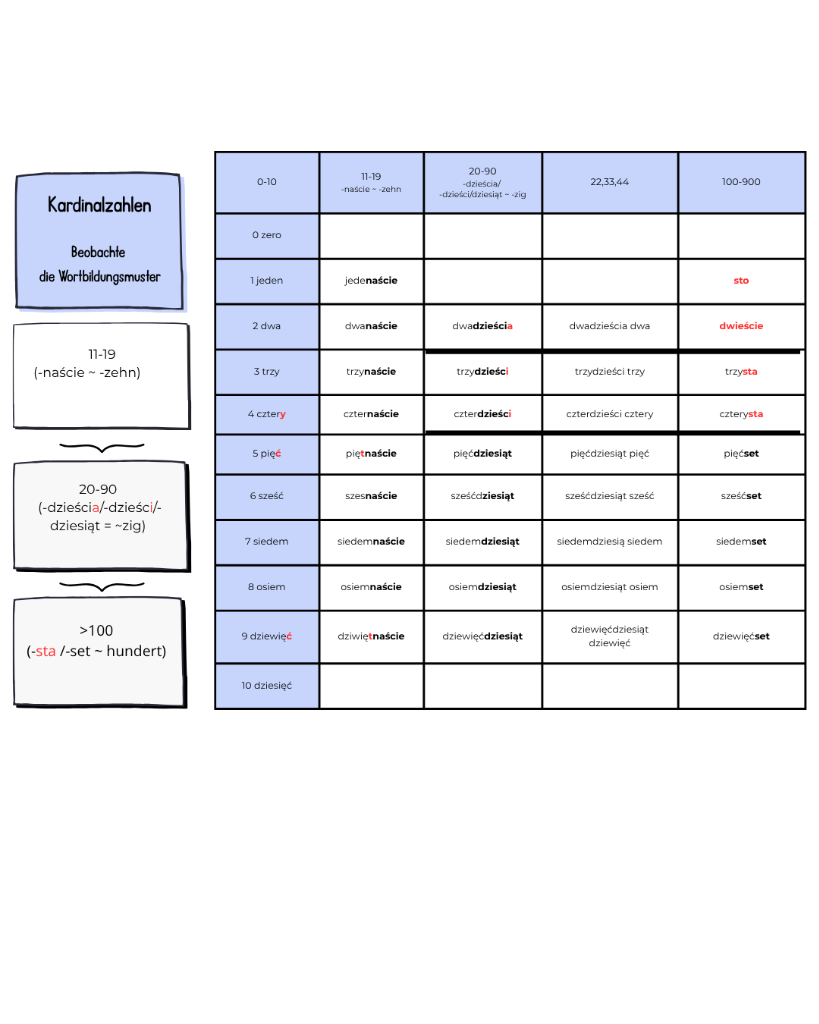
Cardinal numbers and their patterns
Look at the word formation patterns, especially the endings for the numbers from 11 to 19, the tens from 20 to 90 and the hundreds. This makes memorising them much easier.
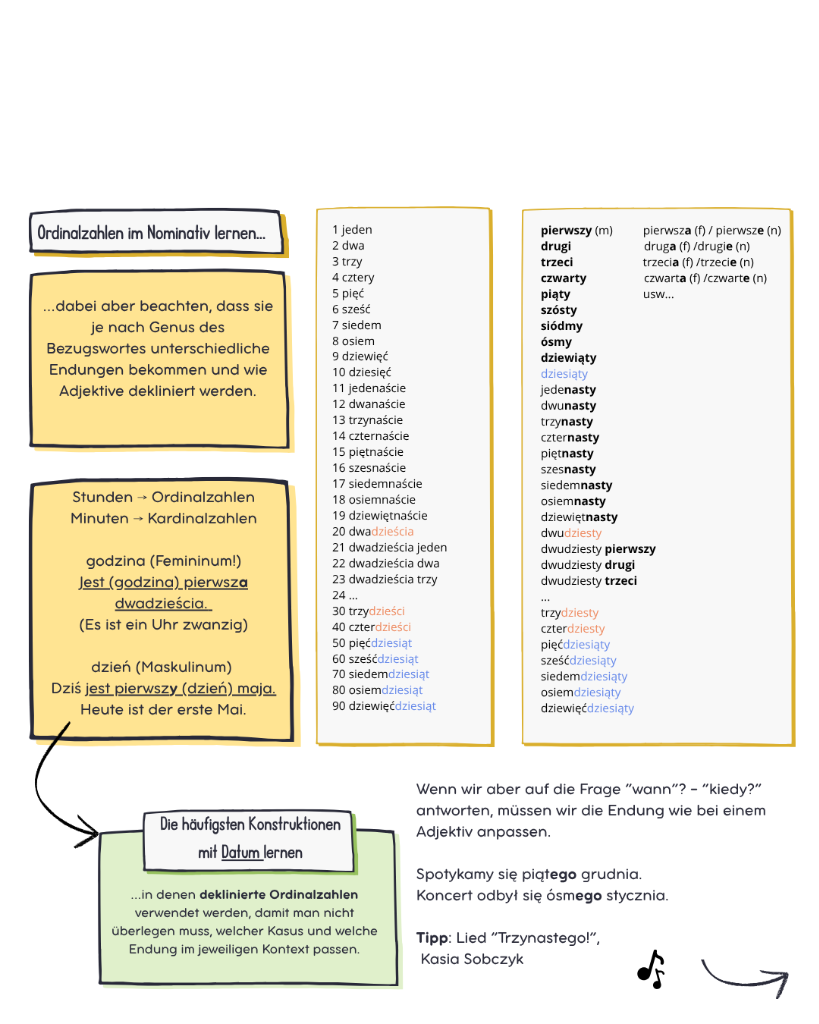
Ordinal numbers in the nominative and when stating the date
Ordinal numbers behave like adjectives and take different endings depending on the gender. For hours we use the ordinal number (the feminine form, since godzina is feminine), while for minutes we use cardinal numbers.
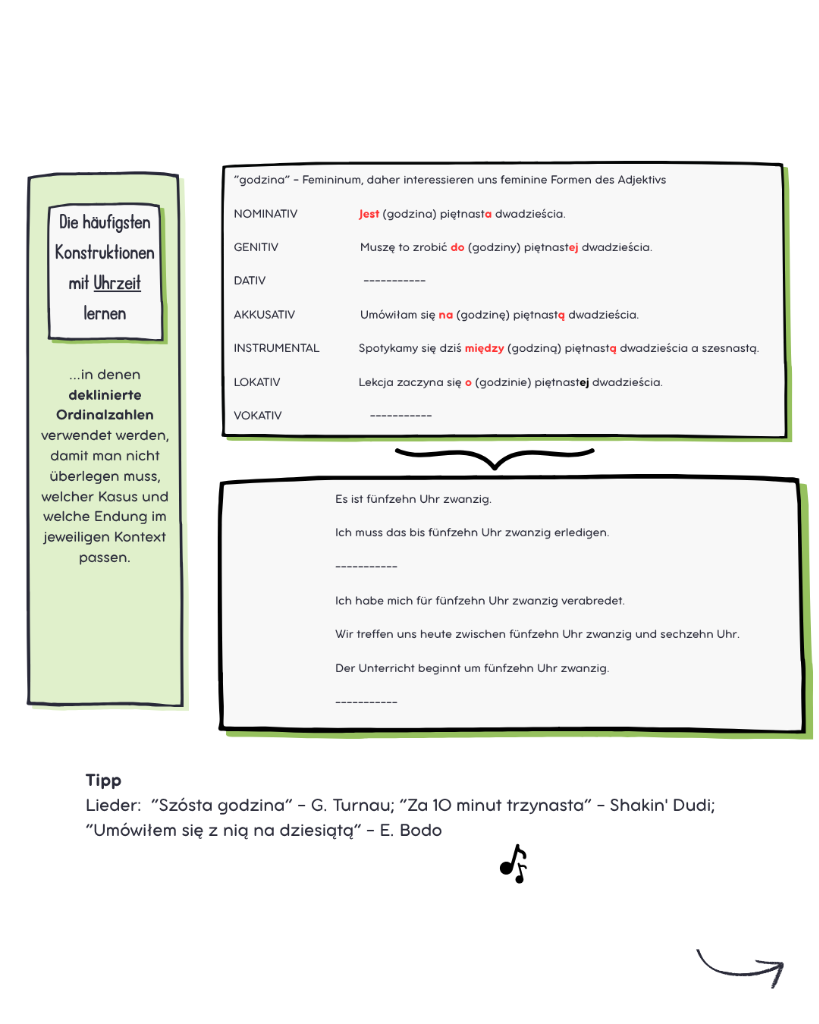
Common constructions with the time
There are typical phrases and situations in which we state the time. Here is an overview of the case and the preposition the time can take:
Learning the month names
The Polish month names are best learned together with their genitive forms, since you need them most often for exact dates (e.g. Dzisiaj jest piąty stycznia).
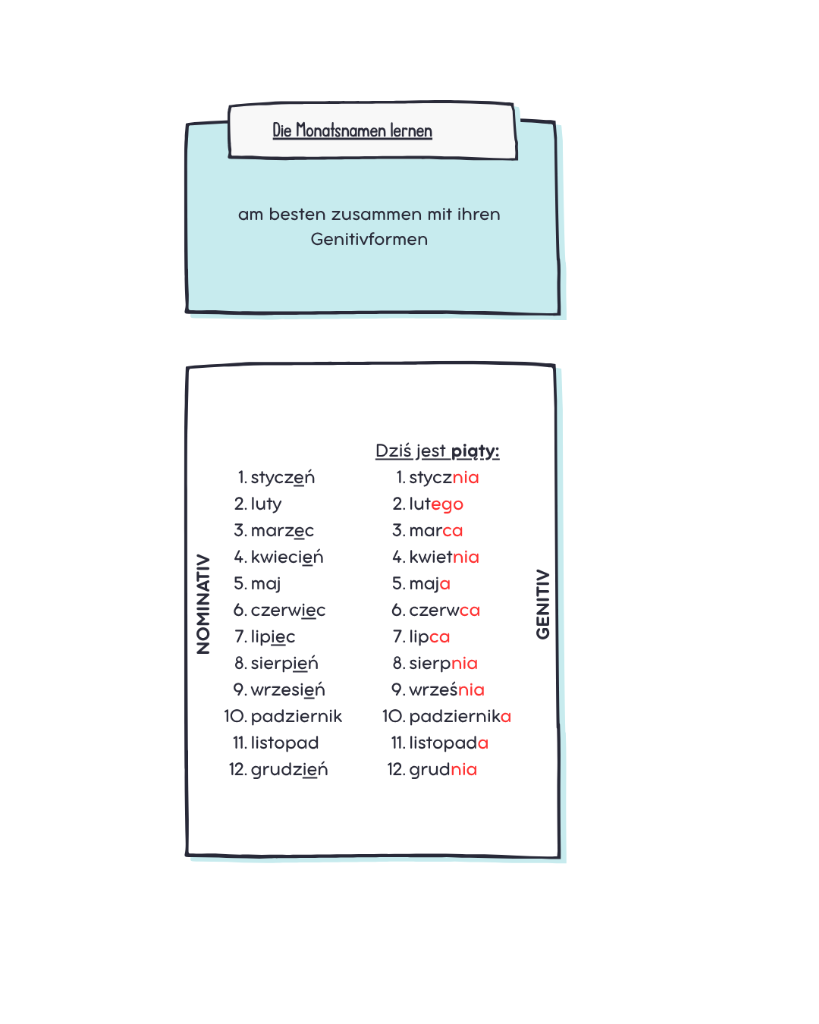
We hope these overviews help you finally master dates and times in Polish!
If you need personal support with Polish, just drop me a line :)