When learning Polish verbs, you don't have to memorize all forms immediately. It's enough to know the personal endings and to learn the 1st and 2nd person singular for each verb. This way, you already know the two "stem forms" and can form the rest much easier.
Personal Endings
| Person | Ending |
|---|---|
| ja | -ę / -m |
| ty | -sz |
| on / ona / ono | Zero ending |
| my | -my |
| wy | -cie |
| oni / one | -ą / (ją --> in the -m/-sz conjugation) |
Example
móc (to be able to / can)
| Person | Form |
|---|---|
| ja | mog-ę |
| ty | może-sz |
| on / ona / ono | moż-e |
| my | może-my |
| wy | może-cie |
| oni / one | mog-ą |
Important Note
In the conjugations:
- -ę, -(i)sz
- -ę, -(y)sz
- -ę, -(e)sz
a "j" might appear in the 3rd person plural, e.g., in:
- pić → oni piją
- studiować → oni studiują
However, this "j" belongs to the stem and not to the personal ending.
Why is it worth learning these forms first?
Anyone who masters the "ja" and "ty" forms often already recognizes the stem of the verb and can form the entire conjugation much more easily.
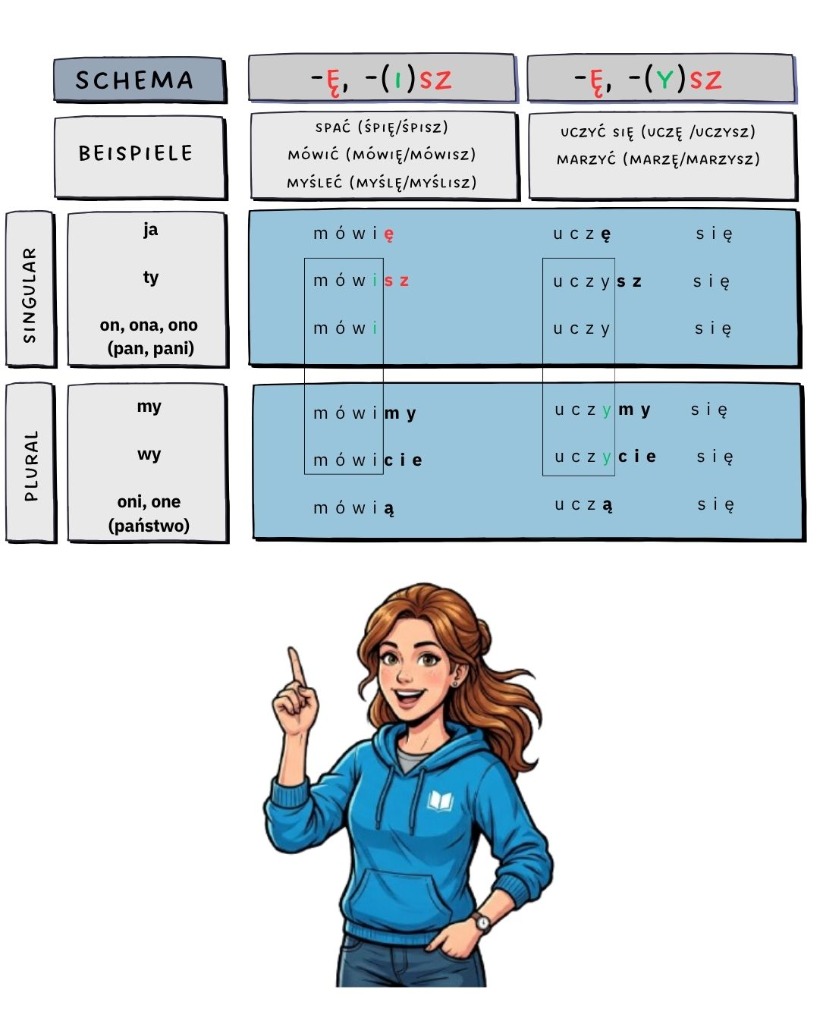
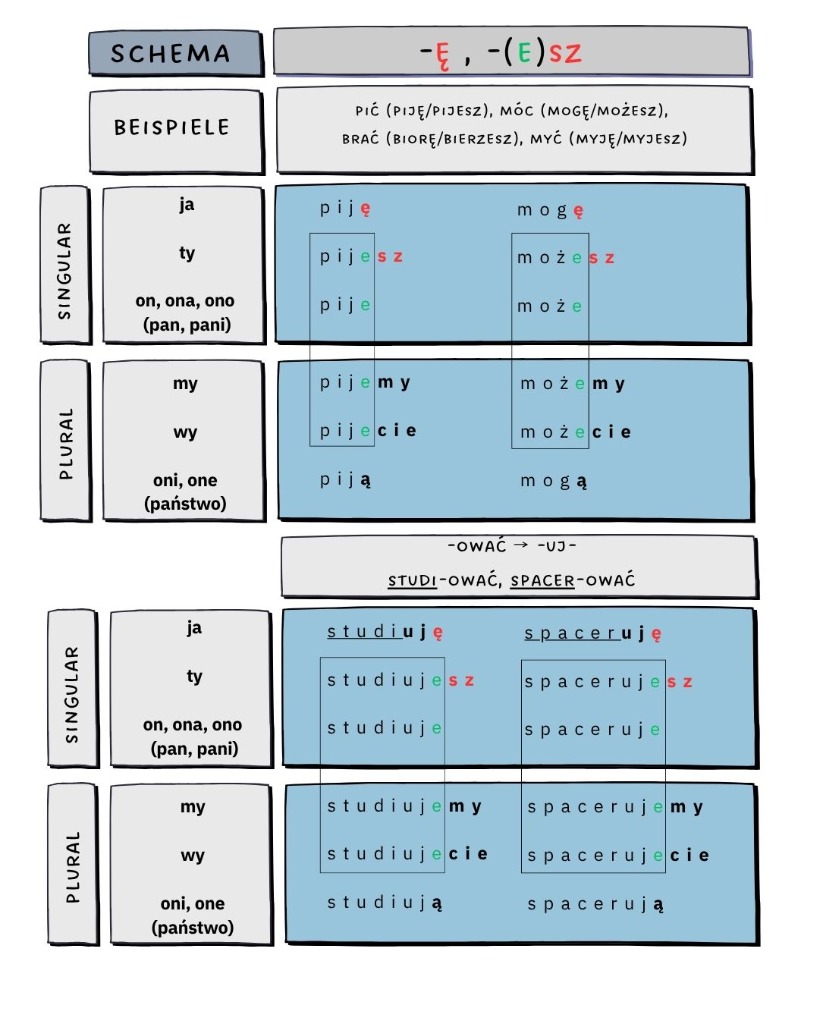
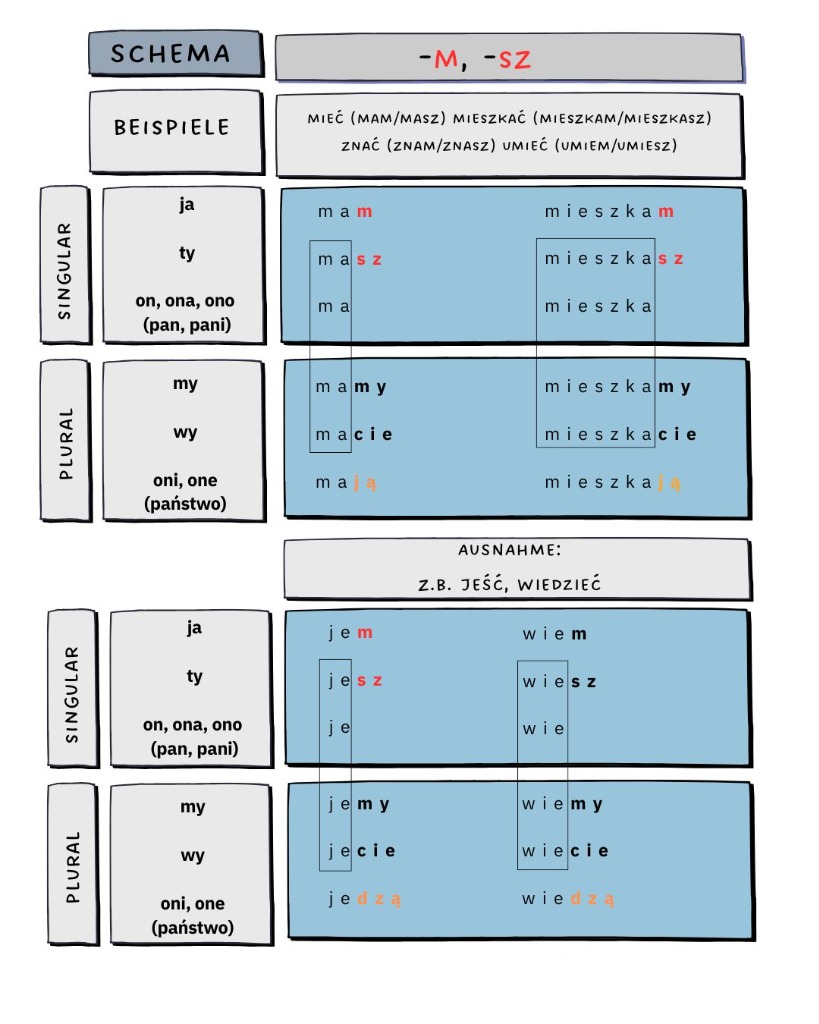
Conjugation Schemas
Here are some visual schemas that illustrate the conjugations again:
Summary
When learning Polish verbs, you don't have to learn all forms at the same time. If you know the personal endings and first memorize the forms for "ja" and "ty" for each verb, you can form the other forms much easier later.